Video of the Divine Service is here. The sermon begins around the 25:55 mark.
In the Name of the Father and of the Son and of the Holy Spirit. Amen.
When Jesus asks His disciples, “Who do you say that I am?” it might be another way of asking them, “What do you think a merciful God would do?” Why do I say that? Because after Peter’s answer, that Jesus is the Christ, the Son of the living God, from that time, Jesus began to show His disciples that it is necessary for Him to go to Jerusalem, to suffer many things, to be killed, and to be raised from the dead. It is necessary, not in the sense that no one could ever conceive of anything different happening, but in the sense that this is God’s will, and God’s will will be done. It is necessary for these things to happen to Jesus. Some people don’t think it was necessary for Jesus to die, that God could have done something else, or that the crucifixion happened simply because of the context in which Jesus found Himself. Or some people don’t think that the resurrection is necessary, that you can have a nice religion, or even Christianity, without the resurrection. But Jesus says no. It is necessary for Jesus to go up to Jerusalem; necessary for Him to suffer many things; necessary for Him to die; necessary for Him to rise from the dead. This is the will of God, and this is what happened.
But when Peter hears this—Peter, who just confessed that Jesus is the Christ of God, His Son—he takes a position of authority over Jesus. He stands out in front of Jesus, takes Jesus aside, and begins to rebuke Him. And here is where Peter shows that he has a different idea from Jesus about what a merciful God would do. It says, “Far be it from You, Lord!” But hidden in those words is the word for “mercy.” Peter is saying something like, “God is merciful, and being merciful requires that He would never let this happen to You.” A merciful God would never let this happen to You.
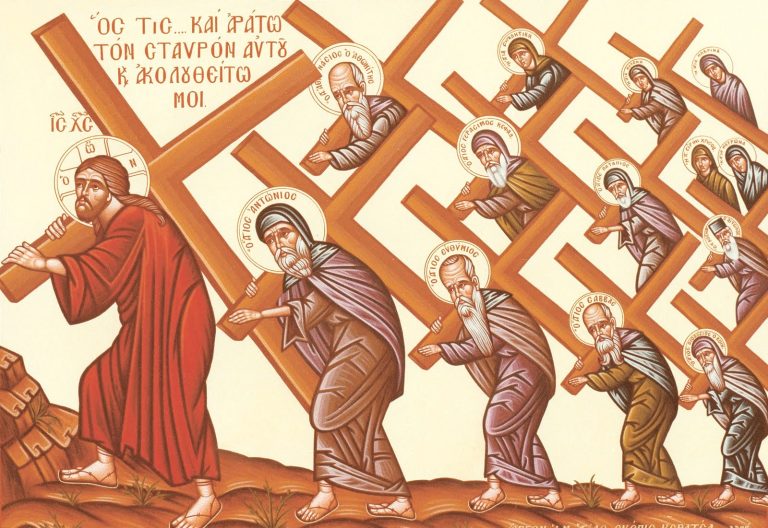
Jesus will not be rebuked by Peter. He says, “Go behind Me, Satan.” That is, stop standing in front of Me, trying to stop Me, with what you think God should or will do. Why does Jesus call him Satan? Because this is exactly the sort of thing that Satan tempted Jesus to do in the wilderness: to refuse to do God’s will and, instead, do His own, independent will. Go back behind Me, where you belong, Peter. That is, follow Me. And this is what it means to follow Jesus: deny yourself, take up your cross, follow after Me—not try to get Me to be a different Son, or a different Christ, or a different God.
Isn’t this the way we act toward God? We might say something like, well, my God would never do anything like that. A sort of abstraction, distant; we theorize about what God would or would not do. But sometimes it gets a little closer to us: a merciful God would never allow this to happen to me. God is merciful, and so He will forbid this thing from happening—or else maybe He’s not merciful. But we don’t get to define the mercy of God. Jesus defines the mercy of God, and He’s told us what it looks like: Jesus in this world, going up to Jerusalem, suffering, dying, rising from the dead. That’s what the mercy of God looks like in this world.
And we do not deny ourselves, but promote ourselves, when we try to have a different God or a different Jesus, or a different way of following Him that doesn’t involve suffering or death—or resurrection. You can’t have resurrection without death. Denying ourselves, of course, is the very last thing we want to do. In our world, currently, denying yourself is the worse possible thing you could do. It is almost blasphemy to deny yourself! Don’t deny yourself, fulfill yourself. Be yourself. Make yourself whatever you want to be and do. Literally the opposite of what Jesus says here. And He tells us why we must deny ourselves. It is because when we try to save our own lives, fulfill our selves, that we die. There is nothing you can do, nothing you can spend, nothing you can create, that will keep you alive. There is no price you can pay, and nothing you can give, in exchange for your life to keep it. Death is coming, no matter how far you follow your heart, and no matter what you do to try to make yourself happy. To save your life is to lose it.
Well, okay, we might think. We know that nothing we accumulate will last after death. Even the unbelievers might be able to figure that one out. But that’s a long way off. I’ll just try to be happy now, and put off the difficult denial of myself until later. We especially think this way when we’re young. Jesus can’t really expect me to deny myself for 70 or 80 years, can He? I’ll just fulfill myself now, and deny myself later. But somehow, later never seems to come. Because the more we let our sinful flesh be fulfilled now, the harder it’s going to hold on to what it gains, the more it will refuse the cross and self-denial, which means, the more it will refuse Jesus and His eternal life. These aren’t neutral questions. They are day-in, day-out questions, life-and-death questions here and now. You can’t give your days now in exchange for your life later. Who knows how many days you have, anyway? That’s not how you find a merciful God. You can’t base that search on the uncertainty of your happiness in these quickly passing days.
But there is a merciful God, and He doesn’t give Himself to you in any kind of exchange, for any kind of price, or negotiation, or bargain. His mercy looks like crucifixion and resurrection. It looks like carrying a cross that your flesh will never want to carry, because who wants to die? And it’s probably a good thing that Jesus doesn’t tell each of us ahead of time what our crosses will be. We might run away before we get started! There will be a cross, but Jesus is patient, and carries us as we bear it. He does not say to Peter, go away, Peter, you’re not worthy of Me. He tells the devil to go away in the wilderness. But to Peter, He says, “Go behind Me, follow Me again, be with Me as I take you through this life, into death—in My death—and into resurrection.” It’s the only life there is, finally. Let’s not pretend otherwise: that we can have a fulfillment life now, and a denial life later. There are only the things of people, and the things of God, and they cannot be reconciled.
God is merciful to those who have nothing to give in exchange for their lives. Only God can give something in exchange for your life, and in exchange for the lives of all people. And He has given Him. He gives Jesus’ life on the cross in exchange for your life, and that is the only certainty you can have. He gives Jesus’ death and resurrection to you in baptism, and in the absolution, and in the Supper. Here is how you know that God is merciful, in what He says and does, not in human speculation about what we think God’s mercy should be or should look like. Here is the certainty, in Jesus’ own promise, that when He appears in His glory on the last day, and pays you back for everything you’ve done, you will find that you get the repayment Jesus alone deserves. Because your life and your sin have been swallowed up in Jesus’ death, and His life is now yours. And His repayment of Jesus is resurrection, eternal life, the glory of God’s presence forever. We only have one life to lose, but to lose it in Christ is to gain the only life that lasts forever. God be merciful to you and grant it for Jesus’ sake.
In the Name of the Father and of the Son and of the Holy Spirit. Amen. “And the peace of God, which surpasses all understanding, will guard your hearts and your minds in Christ Jesus,” (Philippians 4:7, ESV).
— Pr. Timothy Winterstein, 9/1/23
 Bishop and Christian