Audio of the sermon is here:
In the Name of the Father and of the Son and of the Holy Spirit. Amen.
There’s a song by a band I like, and part of the lyrics go like this: “I want to have your baby/but some days I think that maybe/this old world’s too [messed] up for any first-born son” (Over the Rhine, “Changes Come”). She doesn’t say “messed up,” but you get the idea. This old world’s too messed up for any first-born son. And when we look around at the world, it’s true. This world is messed up. And because of it, people are choosing not to have children. I recently saw a study by the Pew Research Group where almost half of the people between 18-49 said they were probably not going to have children. Christians, too, sometimes look around at the world and think it might be better if they did not have children.
But the fact is, if you’re looking at the world to decide if you should do something, you’re looking in the wrong direction. If your hope is in the world, or if your hope is in children, your hope is in the wrong place. Christians don’t have children because they think that the world is good enough, or that their children will do and be what they should be. Christians have children because their hope and faith is in God, who gives children to husbands and wives. Gilbert Meilaender, the Lutheran ethicist, says that it may be that people who feel that the family is in crisis or wonder whether or why they should have children have lost a commitment or a sense of a story to pass on. We forget the wider story of God for us in Jesus Christ from creation to new creation, so we no longer understand our own lives.
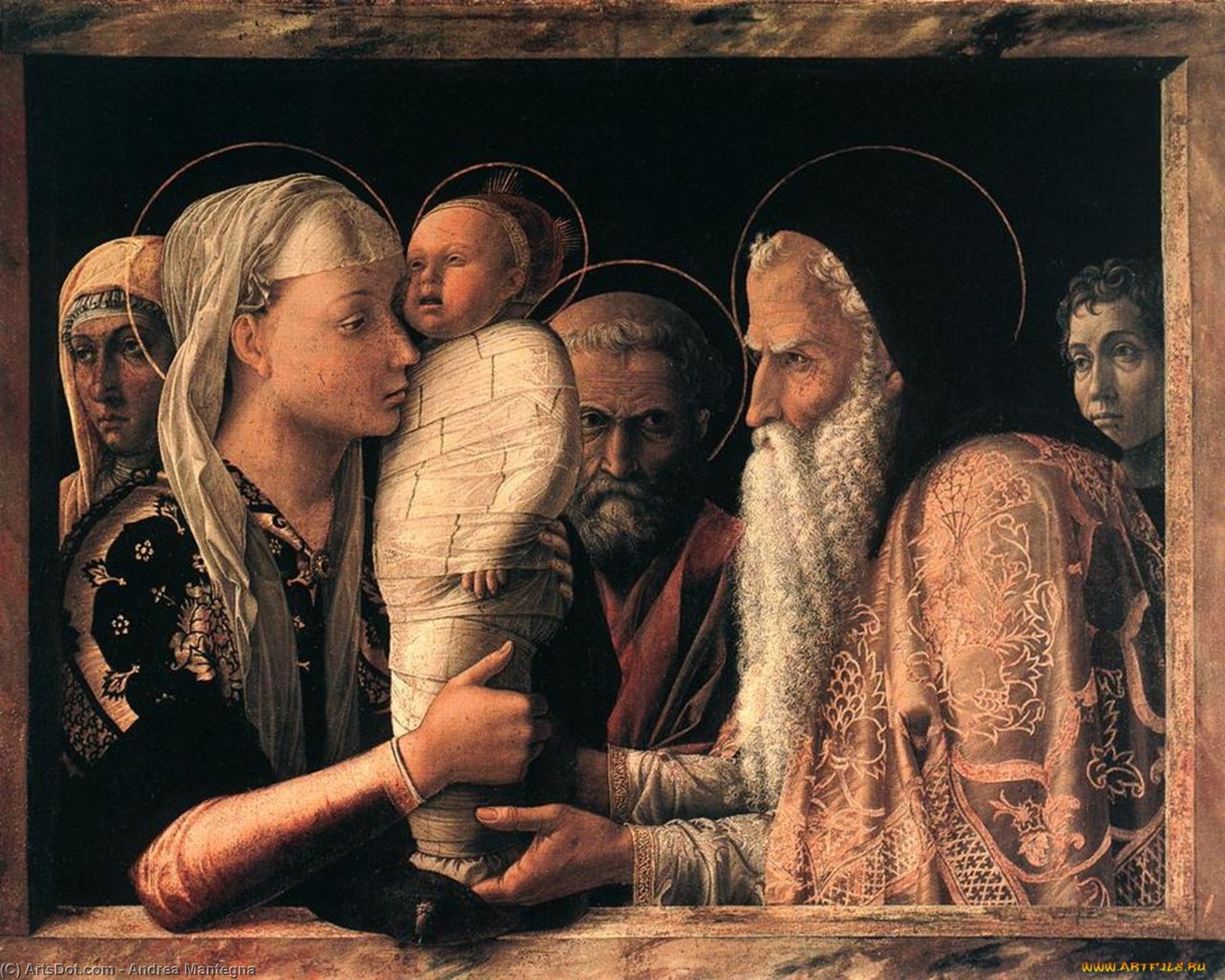
Here in Luke 2, we are right in the very middle of that story. We are right at the juncture of the Old Testament and the New. Simeon and Anna represent the people of the Old Testament and their hope: Simeon has been waiting for the consolation of Israel, and Anna speaks of Jesus to those who were waiting for the redemption of Jerusalem. They see their hope fulfilled in Jesus. My own eyes have seen the salvation that you have prepared before the eyes of all people, Simeon says. This is at the juncture of the Old Testament and its fulfillment. So Mary and Joseph do everything required by the Law, because in Jesus it will be completely fulfilled.
There are two things happening here. One is the sacrifice they bring for Mary’s purification. Leviticus requires that women who give birth to a son wait 40 days and then bring a burnt offering and a sin offering. Today is 40 days after December 25, so we celebrate today that fulfilling of the Law. But there is something else going on, as well. Luke reminds us of the words of Exodus, that the male who first opens the womb will be called holy to the Lord. So, when the days were fulfilled, Mary gave birth to her first-born son and laid Him in the manger. When the days were fulfilled, He was circumcised according to the covenant with Abraham, and given the name Yahshua, which the angel had given them. When the days were fulfilled, they bring Jesus to the temple.
According to Exodus, the first-born son is holy to Yahweh. Thus says Yahweh, “Israel is my first-born son.” So He tells Pharaoh to let His first-born son go, or He will take Pharaoh’s first-born. Pharaoh does not, so the final plague comes upon Egypt. The people who believed the word of God through Moses slaughtered a lamb, and put its blood on the doors. Those who did not believe did not do so. God “passed over” those houses whose doors were painted with the lamb’s blood, but on those that were not, death came. So God tells Israel to remember this forever by consecrating the first-born of animals and people. First-born animals are sacrificed or killed, but first-born sons are redeemed by the sacrifice of a lamb.
So the fact that first-born sons will be called holy to Yahweh looks back to the Passover and God’s deliverance of the people from slavery. But both the Passover and the first-born point forward to God’s first-born. I’m a first-born son, so I kind of wish it were really about first-born sons, that we’re somehow special, but it’s not. It’s about the first-born Son, the Son of God, and the Son of Mary.
But notice: Luke never mentions the lamb to redeem the first-born son, Jesus. All other first-born sons are redeemed. Isaac, lying on the pile of wood under the shadow of Abraham’s knife, is redeemed by the ram caught by its horns. But not Jesus. He is not redeemed. There is no sacrifice for Him. He is holy to Yahweh because He is the redeeming lamb. He is the sacrifice. It is His blood that will redeem all other first-born sons, all first-born daughters, and everyone else too. Paul says that He is the first-born, but so that He will have many brothers. Elsewhere, in Colossians, Paul says that He is the first-born of all creation. Time is all messed up here! Jesus is born to Mary, but He is first: all others are made in His image. He is the true human being, the true man. He is the first-born of all creation, and He is also the first-born from the dead. Not only does He open the womb, He opens the grave. He opens your grave. This is how God said to Ezekiel that we would know our God: when I open your graves, O Israel, and raise you from your graves, then you will know that I am Yahweh, your God.
Here, people of God, is Jesus, your God, who opens your graves. He is the Lamb of God who takes away the sin of the world. He redeems Isaac, and me, and you. He is the ram entangled in the thicket of this world. This world is too messed up for any first-born Son, so in the fullness of time God sent forth His Son, born of a woman, born under the Law, to redeem those who are under the Law. If you feel the weight of your sin, the weight of this world, the weight of bringing children into the world, He is for you. See, His blood now marks our door. Faith points to it; death passes over. Satan cannot harm us! Alleluia (LSB 458:5). Like Simeon, you have seen by faith the salvation of God come into this world, into all the messes we have made. The sign of the cross marks you as one redeemed by Christ the crucified. You say amen when you eat His body and drink His blood. So you, also, like Simeon, can go to your death in peace, because the Lord has said so. You come to this altar as if you were going to your death, so that whenever you go to your death, it may as well be the altar of the Lord—because it’s the same Lord. The Jesus you meet here according to His promise is the Jesus you will meet in your death, and the Jesus who will raise your body from the dead.
Into this world, too messed up for humans to fix, the first-born Son has entered. His blood marks you and death has no hold on you. Go in peace, to your life until the Lord calls you home in death.
In the Name of the Father and of the Son and of the Holy Spirit. Amen. “And the peace of God, which surpasses all understanding, will guard your hearts and your minds in Christ Jesus” (Philippians 4:7, ESV). Amen.
– Pr. Timothy Winterstein, 1/31/25
 Bishop and Christian