Audio of the sermon is here:
In the Name of the Father and of the Son and of the Holy Spirit. Amen.
As we come to the end of the Church year, we start hearing Scriptures with fearful things: wars, earthquakes, famines; signs in sun and moon and sea; the end of the world; the judgment. It is a natural thing when we read or hear about these things to look around us at the world, and compare what we see in the Scriptures with what we see around us. It is natural to wonder how what we read matches what we see. There are generally two paths we follow when we start thinking about the state of the world and the end of it. Typically, we follow verses 25-26 and in the midst of the distress of the nations in perplexity, people faint with fear and foreboding with what is coming on the world. We have the fuel for our fear pumped into our eyeballs every single day, at least if we do more than make phone calls on our devices. And with the fear of what is happening, or what might happen, or what people tell us will happen, we mostly have no control over it. And when we are afraid of what is happening and we have no control over it, anger often follows fear in the face of things over which we have no control. So that’s one path: fear and anger. And a lot of people are walking down that path.
On the other hand, the other typical path is in verse 34. Jesus tells us to watch ourselves that we not be weighed down or burdened by dissipation and drunkenness and by the cares of the world, lest that day overcome us like a trap. To be honest, this path, of despair and cynicism, is more my personality. I tend to get weighed down by the world and want to give up any kind of fighting about it. What’s the point? So typically, in the face of the world and its end, two typical paths are to become afraid and angry, or to despair and become cynical.
And yet, those are, ultimately, both unbelieving paths to which we are tempted. Jesus reminds us that all these things are passing away. All of it: the fearful things, the things that make us angry; as well as the things that make us despair, become cynical, or give up. One of the major points of these readings in the Gospels where Jesus talks about the destruction of Jerusalem as a sign of the destruction of this sin-filled and unbelieving world is not to get so caught up in it that we forget that Jesus is Lord. We have an inability, it seems, to spiritually multi-task: to keep our eyes on both the things of this world and on Jesus. We cannot fear two masters; we cannot make both the things happening in the world, and Jesus, ultimate concerns. There is a hierarchy, a priority, and whenever Jesus and the things that are happening are inverted, we cannot help but drift into fear or cynicism, or both.
In the world, people will faint with fear because they do not know anything outside this earth. Watch yourselves, Jesus says, because you are not of them; you belong to Me. So do not get weighed down with dissipation—that is, the unbridled indulgence of sinful desires—or drunkenness or the cares of the world. That is related to the parable Jesus tells in Luke 12, where master leaves one of his servants in charge, and the servant apparently believes that the master is not ever coming back, so he begins to beat the other servants and eat and drink and get drunk. Then the master will return on a day and hour that he does not know or expect, and will, Jesus says, cut him in pieces and put him with the unbelievers (Luke 12:42-46).
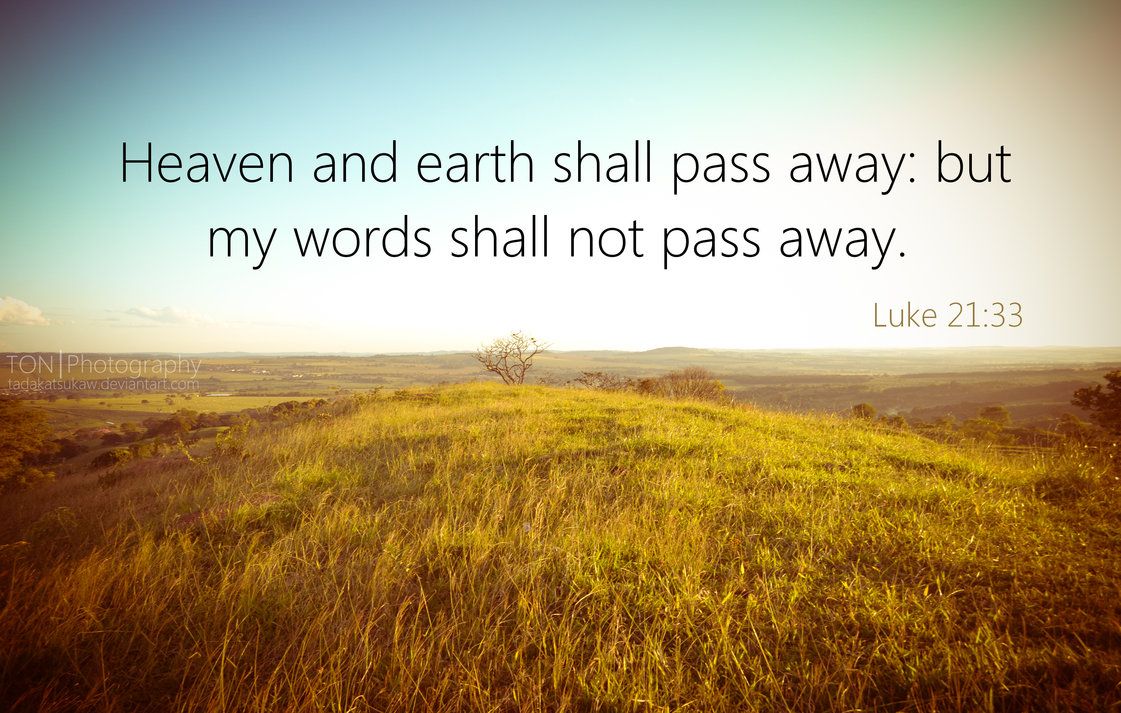
Those are simply unbelieving and idolatrous responses to the things of the world. But all these things are passing away. This world must pass away because it is corrupted with sin and death, so much so that the Creator, through whom all things were made, took it upon Himself to enter this creation and make it right from the inside out. The present form of the creation is still passing away, but the Word made flesh will never die anymore. And nothing that He says will fail. So He speaks to you, in your fear and anger and despair and cynicism—and also to you who are eternal optimists, if there are any!—He speaks to you and tells you that His word and promise cannot fail. All of this is passing away—heaven and earth, as it is, will pass away—but His Word will never pass away. It is the basis for all creation, and so it is more fundamental even than this creation. The new heavens and the new earth, in which only righteousness dwells, is coming. Here, in the company of His Church, created and sustained by His Word and His Body and Blood, He upholds you and keeps you through this world, even and especially when you are tempted to fear or despair.
It is because He has made a way into resurrection and new creation that none of these things need destroy your faith or your place with Christ. Therefore, also, instead of giving in to the fears of the world or the despair of unbelief, you are those to whom St. Paul says, “Do not grow weary of doing good.” And it’s so easy to grow weary in this world! Maybe it looks like the Word of God isn’t accomplishing anything. Maybe it looks like your parenting is not having any effect. Maybe it looks like your job is worthless. Nevertheless, these earthly circumstances are passing away. Therefore, do not grow weary of doing good. The places God has put you, today, this week, now, are where He wants you for now. The people He has brought into your life, and the people’s lives into which He has brought you, He intends you to do good to them. Whatever it seems, as long as it’s not sinful in and of itself, it is a holy and divine work. Your parenting, your studying, your working, your relationships—let me say it again: these are holy and divine works, because you are a holy child of God in Christ. God is using you as His own mask to hide behind and to do good to those people in those places. And He is so good at it, we don’t even always recognize it! He has orchestrated all things so well, that He puts people in some places and then He puts other people in other places, and He serves all people through other people, even when those people don’t know or believe it. Do not grow weary of doing good, because it is God’s own good work,
But weariness is a typical state of being in this world. And we are always tempted to fear, anger, despair, and cynicism in the face of it all. That is why we are here, though. We cannot sustain our own faith enough to stand before the Son of Man. We are too weak. But His Word is not too weak. His Spirit is not too weak. His body and blood are not too weak, regardless of how they appear to unbelief. This is the God who is Lord over heaven and earth, even now, before we see it redeemed and restored. But He has already done it in His own death and resurrection. We are simply waiting and watching, as Christians have for a very long time, to see what He has done. All this will pass away, but the Word of God in Jesus Christ will never pass away. Hold fast to Him, and even when you can’t, He holds fast to you. His promise will not fail.
In the Name of the Father and of the Son and of the Holy Spirit. Amen. “And the peace of God, which surpasses all understanding, will guard your hearts and your minds in Christ Jesus” (Philippians 4:7, ESV). Amen.
— Pr. Timothy Winterstein, 11/14/25
 Bishop and Christian