Audio of the sermon is here:
In the Name of the Father and of the Son and of the Holy Spirit. Amen.
Have you ever been reading the Gospel of John and you’ve had trouble following Jesus’ logic? Someone will say something to Jesus or ask something of Him, and then His answer doesn’t seem to have anything to do with what the person said to Him? Certainly, this happens in the other Gospels when people ask questions of Jesus, but He wants them to ask different questions, so He gives them the answer to the question He wants them to ask. But it seems to be more pronounced in the Gospel of John. Jesus will say something, and He is very clear about what He is saying, but people misunderstand. This is true of the Word of God in general. Both our limits of understanding as creatures, and the obscuring and distortion of our understanding by sin mean that we do not always understand what Jesus is saying. The problem isn’t in the Word of God; it’s in us.
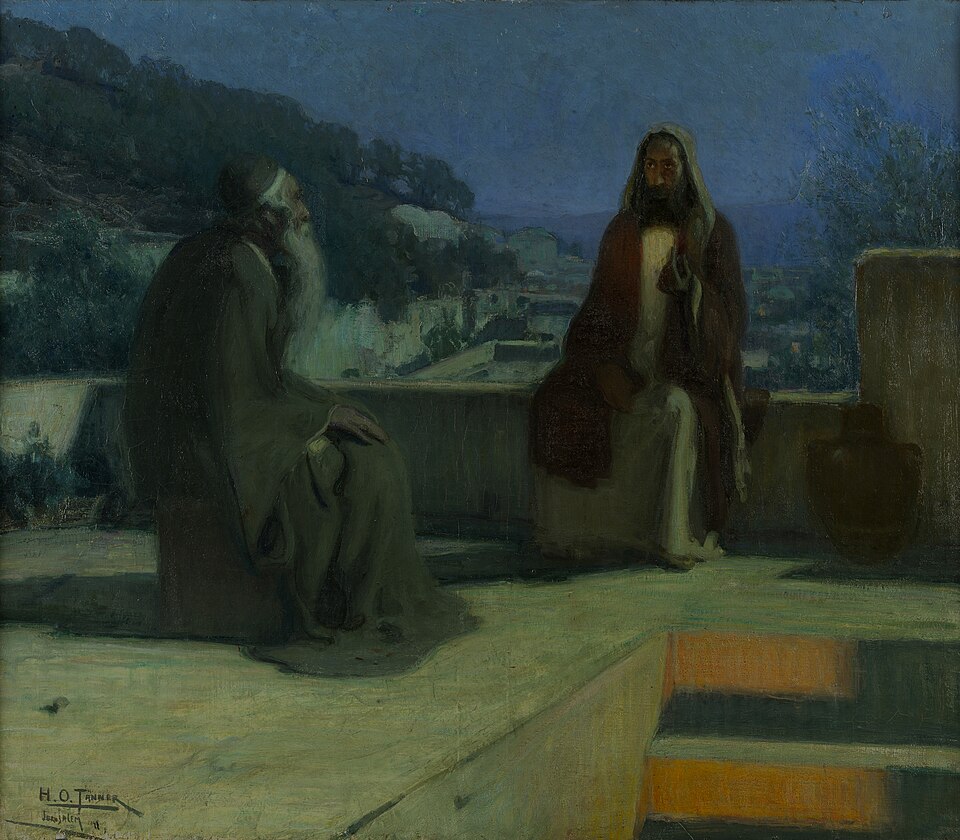
Here is one misunderstanding, on the part of Nicodemus. What Jesus says doesn’t seem to be connected to what Nicodemus is saying. Nicodemus says, “Rabbi, we know that you are a teacher come from God; because except God is with him, no one is able to do the works that You do.” Jesus then starts talking about the Kingdom of God and you can sympathize with Nicodemus; what does that have to do with what Nicodemus is saying? But Jesus uses the same words that Nicodemus uses. Nicodemus says, “Except God is with him, no one is able to do the works that You do.” And then Jesus says, “Except one is born from above, he is not able to see the Kingdom of God.” Nicodemus wants to talk about God being with Jesus, and Jesus being sent by God, but Jesus wants Him to see that the Word has been made flesh and dwells with Nicodemus. Look and see that the Kingdom of God is right in front of Him. Jesus brings it with Him because He is the King.
But all Nicodemus can hear is one word: anōthen. Almost always it means “from above,” but it can also mean “again,” and that’s how Nicodemus hears it. “An old man cannot enter into his mother’s womb and be born a second time, can he?” And Jesus reverses the verbs of Nicodemus: unless one is born of water and the Spirit, he cannot enter into the Kingdom of God.” It is not simply being born again, it is being born from above, as John reminds us: Jesus came to His own and His own did not receive Him, but to those who did receive Him, He gave the authority to become children of God, born not from blood, or from the will of the flesh, or from the will of man, but from God—from above. It’s not about entering into your mother’s womb again and being born; it’s about being born from water and the Spirit and entering into the Kingdom of God. What is born of the flesh is flesh and destined for death; what is born of the Spirit is Spirit, and the Spirit is life.
Nicodemus wants to talk about human, earthly, rational things like being born from your mother and the works of Jesus he can see. But Jesus wants to talk about the heavenly things in the earthly and the one to whom the works point. It’s not about the signs, it’s about the one to whom the signs point. Like Moses lifting up the serpent in the wilderness. That was a sign. It was not the thing in itself. The people were not supposed to trust the serpent. Later they did and made it into an idol. Instead, they were supposed to trust the word of God from Moses and look at the serpent and be healed. But now the reality has come, the heavenly one who fulfills the earthly, the Son of Man who must be lifted up like that serpent, not as a sign to something else, but as the thing itself. Do not only look at Him, but believe Him when He is lifted up. Because in Him is eternal life. There is the judgment, which is why Jesus has not come to judge and condemn the world. He has come to save the condemned world by becoming the condemnation and taking it away from the world. This is how God loved the world: He gave His Son into the world to be lifted up and draw all people to Himself—to draw you to Himself—so that everyone believing in Him would never die but have eternal life. This is the same as Paul’s commentary on John 3 in his letter to Titus: When the goodness and loving-kindness—the philanthropy, friendship with people—of God was revealed, not because of works done by us in righteousness, but simply because of His mercy, He saved us by washing of the “again-birth” (I think Paul made that word up) and the making-new of the Holy Spirit, which He has poured out on us richly through Jesus Christ our Savior, in order that being made righteous by that grace, we might become heirs according to the hope of eternal life. Water, new birth, Holy Spirit, Jesus—they all go together.
And one final earthly thing that is also a spiritual thing. Jesus says that the wind blows where it will and you hear its sound, but you don’t know where it’s coming from or where it goes. So it is with everyone who is born of the Spirit. We take that, naturally, as Jesus telling us that the wind is a metaphor for the way the Spirit gives the new birth. But in both Greek and Hebrew, “wind” is the same word as “Spirit.” Jesus is not talking about the wind here as a metaphor for the Spirit. It is the Spirit all the way: The Spirit breathes and you hear His voice, but you do not know where He comes from or where He goes. Thus it is with everyone born from the Spirit. You can hear the Word of Jesus by which the Spirit makes believers, but you can’t control it, you can’t predict it, you can’t decide when and where the Spirit is going to do His calling, gathering, enlightening, making-holy work. That’s how it is with everyone born of the Spirit. That’s how it is with you.
And lest you think I’m making the whole thing up, there is a Scripture that speaks of the Word and the Spirit and breathing and water. This is at least part of why Jesus says to Nicodemus: you are a teacher of Israel and you do not understand these things? All the Scriptures, the Spirit, and the prophets testify of the things Jesus is saying about new birth, but Nicodemus does not have ears to hear or eyes to see. Psalm 147 uses these words together. The psalmist is talking about winter, which we have had enough of. He’s talking about how God makes the ice and snow and frost. And then he says this: “[God] sends His word and melts them; His Spirit will breathe and the waters will flow.” That’s the Greek for Psalm 147, which in English has the same as John 3: He makes His wind blow and the waters flow. But here is the earthly thing fulfilled in the man from heaven: when God sends out His Word, cold and frozen places melt; cold and frozen hearts are set free from their winter of discontent. His Spirit breathes and the waters flow. This is how it is with everyone born from the Spirit, by water and the word: the waters flow and bring the eternal life of Jesus. On the cross, Jesus hands over the Spirit and blood and water flow from His side, all the way to this font, and the one in which you were baptized, and whatever other water becomes the means by which the Spirit gives life, welling up into an eternal spring, from which you may drink and never be thirsty again.
Everyone who is thirsty, Jesus says, let him come to Me and drink! Because rivers of living water flow from My side! The Spirit has brought My word to you, so that you will see and enter into the Kingdom of God. Come and drink and live! Worship the Father in the Spirit and in the Son who is the Truth. Beloved Bride of Christ, you will not die, but live, because you have been born of water and the Spirit; and Jesus will raise you up on the last day.
In the Name of the Father and of the Son and of the Holy Spirit. Amen. “And the peace of God, which surpasses all understanding, will guard your hearts and your minds in Christ Jesus” (Philippians 4:7, ESV). Amen.
– Pr. Timothy Winterstein, 2/28/26
 Bishop and Christian