Audio of the sermon is here:
In the Name of the Father and of the Son and of the Holy Spirit. Amen.
When God makes a covenant, there are a few necessary pieces: a promise, a sacrifice, some blood, and eating and drinking. Even if it’s not called a covenant, these things continually come together in the Scriptures. “Covenant” in the Hebrew Scriptures is anything from an alliance, an agreement, a compact, to an ordinance or constitution that a king gives his subjects. God’s covenants with His people are a combination of both of those, because God promises that He will do certain things; the people do not willingly enter these covenants. God chose them. God chose Abraham, Isaac, and Jacob. God chose the sons of Jacob, the tribes of Israel. And God gives His ordinance or constitution to the people. But in Hebrew, you don’t “make” a covenant. You “cut” a covenant, like God does with Abram in Genesis 15. Abram cuts some animals in half. It seems that normally, both people making the covenant would walk between those animals, essentially promising to face death if they did not keep their sides of the covenant.
In this covenant, though, God puts Abram into the same sort of sleep into which He put Adam when He made Eve, and the only things that pass through the animals are a fire-pot of smoke and a torch of fire, symbols for Yahweh’s presence. Abram is not even awake when God makes that covenant with him! It’s a two-sided covenant, but only one side makes the promise. God cuts another covenant at Sinai, starting in Exodus 19. And this, too, is punctuated and sealed with sacrifices of animals. Here the blood from those animals goes half on the altar and half on the people, and Moses says, “Look: the blood of the covenant that Yahweh has cut with you according to all these words” (Exodus 24:8). And Moses, Aaron, Nadab, Abihu and seventy of the elders of the people go up on the mountain and they see the God of Israel, in some way below His feet, under very clear sapphire bricks, whatever exactly that looked like! “And He did not lay His hand on the chief people of Israel; they beheld God, and ate and drank” (Exodus 24:11). As it was at Sinai, so it was on their way out of Egypt: a sheep or a goat killed, and the blood of that animal sprinkled on the doors of Israel. “On all the gods of Egypt I will execute judgments: I am Yahweh. The blood shall be a sign for you, on the houses where you are. And when I see the blood, I will pass over you, and no plague will befall you to destroy you, when I strike the land of Egypt” (Exodus 12:12-13). And the people of Israel ate in haste, with their belts fastened, their sandals on their feet, and their staffs in their hands, ready to go, their exodus marked by blood and death and eating.
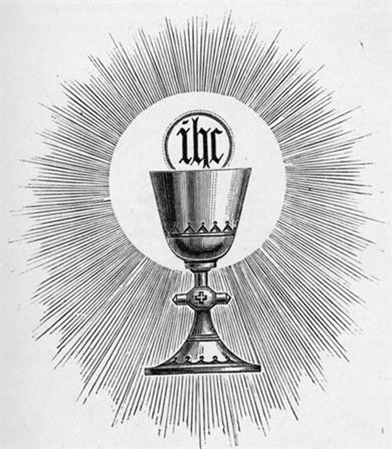
So Jesus makes His covenant at the Passover, giving the reality of the Lamb of God in place of His shadow in the Passover lamb. It was of Jesus’ exodus that Moses, Elijah, and Jesus spoke on the mountain of transfiguration (Luke 9:30). Unlike all the previous covenants, where the sacrifice and the blood came before the eating and drinking, when Jesus gives His promise, the eating and drinking come before the sacrifice, before the blood is shed. Even so, God’s never been much concerned with our sense of time. It’s all the same, whatever happens first or last. When the prophets speak about what God will do, they speak of it in the past tense, because it’s as good as done. Our questions about the fact that Jesus says, “this is My body given, and this is My blood shed” before His body is given and His blood shed are irrelevant to the fact that what Jesus says He gives. This is the blood of the new and eternal covenant, fulfilling and bringing to reality in one death, in the blood of the single Lamb of God, the blood of all those Passover lambs, all those deaths, all those sacrifices. Death because we die; death because we kill. Death because death is the wages paid out for sin; it is 100% earned by us, not by the lambs, and not by the Lamb. From the Garden where God clothes Adam and Eve in the skins of dead animals, to the animals Abram killed, to the oxen at Mt. Sinai: all that death because of our enemy, death.
But God takes all that death and makes it a sign of life in the body of Jesus—and only there. Death is death is death, unless it is the death of God, who is Life. And that Life is spoken in words to the people, from the first to the last. The blood of the covenant, tied to the words God had given them. That blood covered them and they saw God and ate and drank. How much more will the blood of Christ purify our consciences from dead works to serve the living God? (Hebrews 9:14) Even though the covenant means that the one who breaks it should die, in this case it is the one who keeps it who dies. Not Abram, not Israel, but God. He is the mediator of a new covenant, which took effect at His death. If someone makes a will—his last “will and testament”—nothing that’s in the will happens until the person dies. What Jesus does in this final Passover meal with His chosen apostles, He writes out that will for them, reads it, puts the seal of His Word on it. And though they do not question, as far as we know, it couldn’t have gone into effect until Jesus’ death, when His body was broken and His blood was shed. But the covenant, the testament, remains what it is. It is those precise words, which cannot be changed or altered after the Man’s death, which are forever in effect.
“All the words that Yahweh has spoken, we will do” (Exodus 24:3). Do this in remembrance of Me. “This is My blood of the covenant, which is poured out for many for the forgiveness of sins.” Not the many, as opposed to the others for whom it is not poured out, but the many for whom the One pours out His blood. Because without the shedding of blood there is no forgiveness of sins. Roughly 700 years before Jesus’ birth, Isaiah says that the people had made a covenant with death by their idolatry and refusal to hear God’s words. Every sin, every lie, every moment that we pretend we live apart from the God who is life, is a covenant with death. It was made when Adam and Eve chose for themselves the fruit that marked the distinction between Creator and creature—that is, they crossed the dividing line from receiving all of life, all of creation, as a pure and free gift from God to choosing, deciding, aiming forever at death. They cut that covenant with death and we have kept it ever since. In the day you eat of it, you shall surely die.
But God would not let that covenant stand. He says through Isaiah that He is going to sweep away the lies in which they take refuge and overwhelm the shelter of falsehood. Then your covenant with death will be annulled and your agreement with Sheol, the place of the dead, will not stand (Isaiah 28:17-18). The covenant with death, which is the only one we knew, has been annulled and replaced with the covenant in Jesus’ blood.
Stop hanging on to your covenant with death. It has been ripped up, nailed to the cross, annulled by the death of Jesus. Do not pollute the covenant of God with old covenants, by hanging on to the lies the world tells and the falsehoods in which you take refuge: “as long as it’s not hurting anyone else,” “no one knows about it,” “it’s just a few nights a week, a few glances, a few websites; just a little cheating, a little hatred, a little gossip, a little grudge,” “as long as I’m happy.” God has swept away those lies and destroyed that refuge. He has annulled your covenant with death, and here, tonight, in the body and blood of Jesus in the bread and the cup is the evidence, the proof, the seal that you are not your own; you have been bought with a price. You have been joined body and soul to Jesus’ body, blood, soul, and divinity. So honor God in both body and soul. “Christ, our Passover lamb has been sacrificed. Let us therefore celebrate the festival, not with the old leaven of malice and evil, but with the unleavened bread of sincerity and truth” (1 Corinthians 5:8).
His death marks the end of death’s reign and cuts us off from that covenant forever. Now, because He is raised from the dead, He gives us the covenant of His blood, which is His everlasting, divine life. Here you baptized believers receive that body and blood for your forgiveness, life, and salvation. Here you baptized believers, as often as you eat this bread and drink the cup, proclaim the Lord’s death until He comes (1 Corinthians 11:26). Here you are in the presence of the living God, who will not lay His hand on you in judgment for Christ’s sake; here you behold God and eat and drink.
In the Name of the Father and of the Son and of the Holy Spirit. Amen. “And the peace of God, which surpasses all understanding, will guard your hearts and your minds in Christ Jesus” (Philippians 4:7, ESV). Amen.
– Pr. Timothy Winterstein, 4/1/26
 Bishop and Christian