Audio of the sermon is here:
In the Name of the Father and of the Son and of the Holy Spirit. Amen.
You know how the stories go. It happens in story after story, to build tension: it looks like the good guys or girls are out of options. They’ve tried everything. They’ve exhausted every idea. They have no more possible helpers. It looks like the bad guys will certainly win. You keep hoping that they might be rescued, but it looks hopeless. And then, at the last possible instant, someone appears or something happens, and they—and you—breathe a sigh of relief.
But this story—the one we hear every year on Good Friday, and the one to which all Christians are tied each week—this is not quite the same. Consider the Garden into which God had put Adam and Eve. They had everything they needed. They had life from God, who is life itself. They did not fear anything. The man had given names to the animals; they were his fellow creatures. The whole creation was in harmony together, the man and the woman, the other animals, the heaven and the earth. They were in harmony together because they were in harmony with their Creator. And then the serpent, whose existence as the tempter is unexplained in Genesis, stops to speak to the woman about what she really wanted, which was obviously something better than whatever God had given her. That’s the seed that sends out its poisoned roots, and grows into a corrupted plant, with diseased fruit: God is holding something back from you. He doesn’t want you to have everything you should have. Why should He decide how things should be? Don’t you have reason? Aren’t you a person? Don’t you have rights? You should decide what’s right for you; don’t let some myth determine your sense of right and wrong, and how you should act. Eve considers while Adam stands silently by, the Words of their Creator having been driven out of their minds and hearts and mouths by the words of the serpent.
If this were any other story, we would know the stakes with which they’re playing, and our breathing and heartbeat would increase. But there is no ghost in this machine to save them. By the time that God shows up, it’s too late. There is only fear, and hiding, and curse, and death. Why didn’t God intervene? Why didn’t He stop them before it got to the point where every inclination of their hearts was only evil continually, which is how it was when God tells Noah to build a big boat? All that’s left is rain, and flooding, and death. It looks like the bad guys win.
It’s true, God shows up to save the people from slavery, but only after 400 years in Egypt! God does save them from the Egyptian army, but only after a long, sleepless night. God saves them from the venom of the fiery serpents, but only after “many people of Israel had died.” He brings them to the land, after 40 years and the deaths of all those who refused to believe the report of Joshua and Caleb and go into the land. He brings them back from exile in Babylon, but only after 70 years.
God always seems to show up too late. He always seems to wait too long. The best example is that it takes many thousands of years from the promise in Genesis 3 until the Seed of the woman is born in Bethlehem. And yet, Paul has the audacity to say to the Galatians that it was in the “fullness of time” that God sent forth His Son (Galatians 4:4). Which is to say something like, at just the right time. At just the right time, while we were weak, Christ died for the ungodly (Romans 5:6).
And maybe it seems like He shows up too late for you. Someone you love died. Someone did not get healed. An opportunity you wanted and prayed for went to someone else. A person you thought was exactly right for you ended up finding someone else. Your initial excitement at becoming a Christian has faded under the weight of living in this world. Or maybe you never felt whatever excitement someone told you that you should feel. You’re overwhelmed by your job, your family, your bills, or something else. God has given you more than you can handle. You feel like Martha and Mary, who told Jesus that Lazarus, whom Jesus loved, was sick, and Jesus waited until Lazarus died to show up.
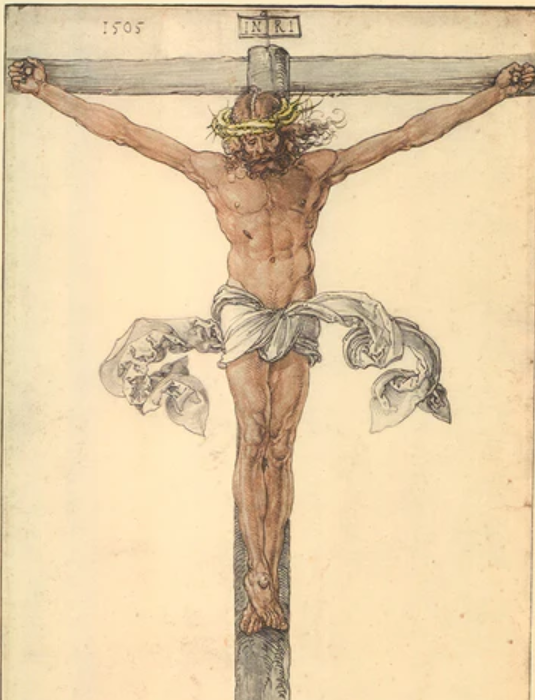
And what about Jesus Himself? Betrayed, denied, whipped, crowned with thorns, crucified, and buried. Where was God then? In John’s Gospel, Jesus seems to bravely and even stoically suffer what comes to Him, but in the other Gospels, He asks the Father to take the cup of suffering from Him, and He cries out in the words of the psalm, My God, why have You forsaken Me? In the days of His flesh, Jesus offered up loud cries and tears to the one who could save Him from death. But He still died. Not surprising, then, that the disciples on the way to Emmaus say, “We had hoped He was the one to redeem Israel.” Looks like God doesn’t show up; looks like death, the great enemy, wins.
But they say those words to the risen Jesus! Is God too late? Only if death is too powerful for Him. But Jesus raises Lazarus. Jesus says, “I am the resurrection and the life. I am He. Shall I not drink the cup the Father has given Me? My Kingdom is not from this world. You would have no authority over Me if it had not been given you from above.” After this, Jesus, knowing that all was now finished, said (to fulfill the Scripture), “I thirst.” When He had received the sour wine, He said, “It is finished,” and He bowed His head and handed over the Spirit. He knows what He is doing, and He knows what His Father is doing. And it is at precisely the right time that God raises Him from the dead, as He takes up His life again. He was heard because of His reverence. He was saved from death by resurrection. God shows up exactly at the right time, in the fullness of time. In the fullness of time, born of a woman, under the law that would condemn Him as a sinner because of our sin. In the fullness of time, He suffers and dies, as He said He would. In the fullness of time, after His Sabbath rest in the tomb, He rises from the dead and creates a Sabbath rest for you. In His perfection in His flesh, He becomes the source of eternal salvation for you and for all who are joined to Him in the obedience of faith.
This is our great high priest. We do not have a high priest who is unable to sympathize—that is, literally “to suffer with”—with our weaknesses, but one who in every respect has been tempted as we are, without sin. While we were still weak, Christ suffered with us and died for us. Therefore let us with confidence draw near to the throne of grace, that we may receive mercy and find grace for a well-timed help. That’s what Hebrews says: a “well-timed help.” God is not too late; He just doesn’t run on our schedule, as if we were God, giving instructions to our subordinate. Whatever else may be true about God’s help, it is not too late. He does not wait too long. Jesus, the crucified and risen one, is on the throne. That’s what makes it a throne of grace. With confidence, you can draw near. No doubts about whether God will be on time—on His time. The Son of God knows. He has been tempted in every way, as you are. He sees. He knows your weaknesses and burdens, because He suffered under them.
God does what is right at the right time, even if He has to raise the dead to do it. And of course, that is, finally, what will make all things right: your sickness, your suffering, your death; the deaths of those you love; everything that’s wrong in this creation; your taking things into your own hands because God didn’t act when you wanted Him to act, or how—all of that will be made right when He raises you from the dead, because it was already made right when He raised Jesus from the dead. Hold fast to your confession. Jesus is Lord; draw near to Him, to receive mercy in His gracious words, His absolution, His assurance that His love is for you. Draw near to Him to eat and drink the body and blood that mean nothing can undo Jesus’ work. You will find grace, and you will find a well-timed help. His is the good time, the right time, the perfect and complete time, even if it has to wait until the resurrection.
In the Name of the Father and of the Son and of the Holy Spirit. Amen. “And the peace of God, which surpasses all understanding, will guard your hearts and your minds in Christ Jesus” (Philippians 4:7, ESV). Amen.
– Pr. Timothy Winterstein, 4/1/26
 Bishop and Christian