Sabbath Rest

In the Name of the Father and of the Son and of the Holy Spirit. Amen.

Think of that very first sabbath. Think of it: the very first seventh day ever in the history of this creation. God had created the heavens and the earth; light and darkness; sky and land and water. He had created the sun, moon, and stars; the plants, and animals, and—the crown of His creation—a man and a woman made in His own image. And His creation was finished, and it was very good. And on the seventh day, God rested from all His work that He had done in creation. He rested, and He brought Adam and Eve into that rest, put them in the Garden, gave them everything as a gift, and spoke His Word to them. Luther imagines that, perhaps, it was about noon on that first sabbath when God was done speaking to Adam and Eve. About noon, when the Divine Service was finished, and Adam and Eve went back to their Garden. About noon, when God finished His conversation with them, and Satan began to speak to Eve. As it is wont to be on this day, Luther says. It is still the same, even on our sabbath day, when we rest from our work so that God can do His. We rest today in the Word of Christ because this is the day that He rose from the dead. Wherever God’s Word is, there the devil also goes about his business of spreading falsehood and false teaching. Because it grieves him that through the Word, we, like Adam in Paradise, should be made citizens of heaven (LW 1:82). Perhaps this is where the quotation, often attributed to Luther, comes from: where God builds a church, the devil builds a chapel. Wherever God’s Word is, the devil also makes it his business to spread falsehood and false teaching, contradicting God’s Word, asking whether God really could have said such things.

Continue reading

Bible Study Summary, 9/13/15

[We are using Pr. Matt Richard‘s helpful study, “How Do We View Christianity?” which sums up two ways of looking at the various aspects of human beings, sin, free will, salvation, and more.]

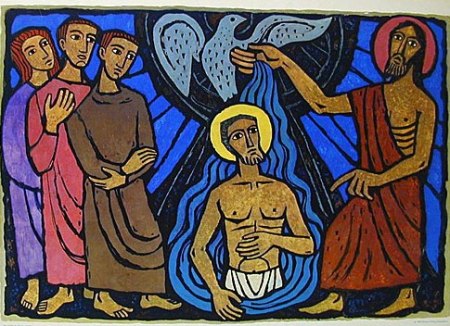
Today we discussed the Sacraments, starting on p. 8 of the study guide.  We looked at Matthew 26:27-28; 1 Peter 3:20-22; and Acts 2:38-39, as well as Titus 3.

The question running through the different positions on the Sacraments is: which direction does the activity go between God and us?  If we think of God above and us below, are the Sacraments my action up toward God, or are they God’s action in Christ down toward us?  Are they my obedience and commitment toward God (the things I do in response to the salvation God has given me)?  Or are they God’s saving action in Christ given to me in concrete ways?  Are they powerless signs of something that happens apart from the Sacraments within me?  Or are they powerful signs of Christ’s saving presence that come to me from outside myself?

The difference between these two positions is everything.  If they are signs of my obedience and commitment, what if my obedience and commitment seems to flag and wane?  Then the only place for me to turn is to an increased effort on my part to demonstrate my commitment and obedience.  There is no Gospel that way; only despair.  On the other hand, if the Sacraments are God’s action toward and for me, flowing from and based in Christ’s death and resurrection, then it is exactly to the promises contained in the Sacraments that I should turn.  There I can know that I have a gracious God, because He has said it, and He continues to distribute His mercy–unlimited and eternal.

We talked briefly about how these questions highlight the fundamental differences between traditions in the Christian Church.  This is not for the purpose of tearing down others, but of being honest about where those differences lie.  If we can’t agree on where the disagreement is, we’re never going to agree on the substance of what is at stake.

Our discussion will continue next Sunday on whether unity is achieved or whether it is demonstrated by sharing the Lord’s Supper.  We had great participation today, with numerous questions and comments, and we hope you will join us next week to share your contribution as we study God’s Word together.