Audio of the sermon is here:
In the Name of the Father and of the Son and of the Holy Spirit. Amen.
On this All Saints’ Day, I am reminding you that you can’t make yourself a saint. You can’t make yourself holy. But when we talk about saints, we talk about someone being “sainted,” by which we mean that he died. Or we say, “She’s such a saint!” meaning she does a lot of good things. So it sneaks into our language that the definition of a saint is someone who died, or someone who does a lot of good things, or both. But there are only a few times in the Bible that saints, or holy ones, are those who have died. The vast, vast majority of times people are called saints, it refers to those who are still walking around on the earth. When Paul writes to the saints in Rome or Ephesus or Philippi—or the starkest example, to the saints in Corinth—he is not writing to only the best people, or to those who are buried in those places. He means those who will receive and hear his letters read.
The saints, the holy ones, are the saints of God. God alone is rightfully called holy, so the things that belong to Him are called holy things; the people who belong to Him are called holy people. You belong to Him in Christ. You didn’t make yourself holy; you didn’t believe in Him or come to Him by your own reason and strength. The Holy Spirit called you by the Gospel, enlightened you with His gifts, sanctifies—that means, make holy—and keeps you in the true faith; just as He calls, gathers, enlightens, and sanctifies the whole Christian Church on earth. So you are holy, together with all others whom the Holy Spirit has called, gathered, enlightened, and sanctified. There’s only one Jesus, so everyone, whether living or dead, who believes Him, is part of the communion of the saints, those who are gathered around Jesus and joined to Him by the holy things they received from Him. Together, we are the holy ones because God has made us holy in Christ by His Spirit.
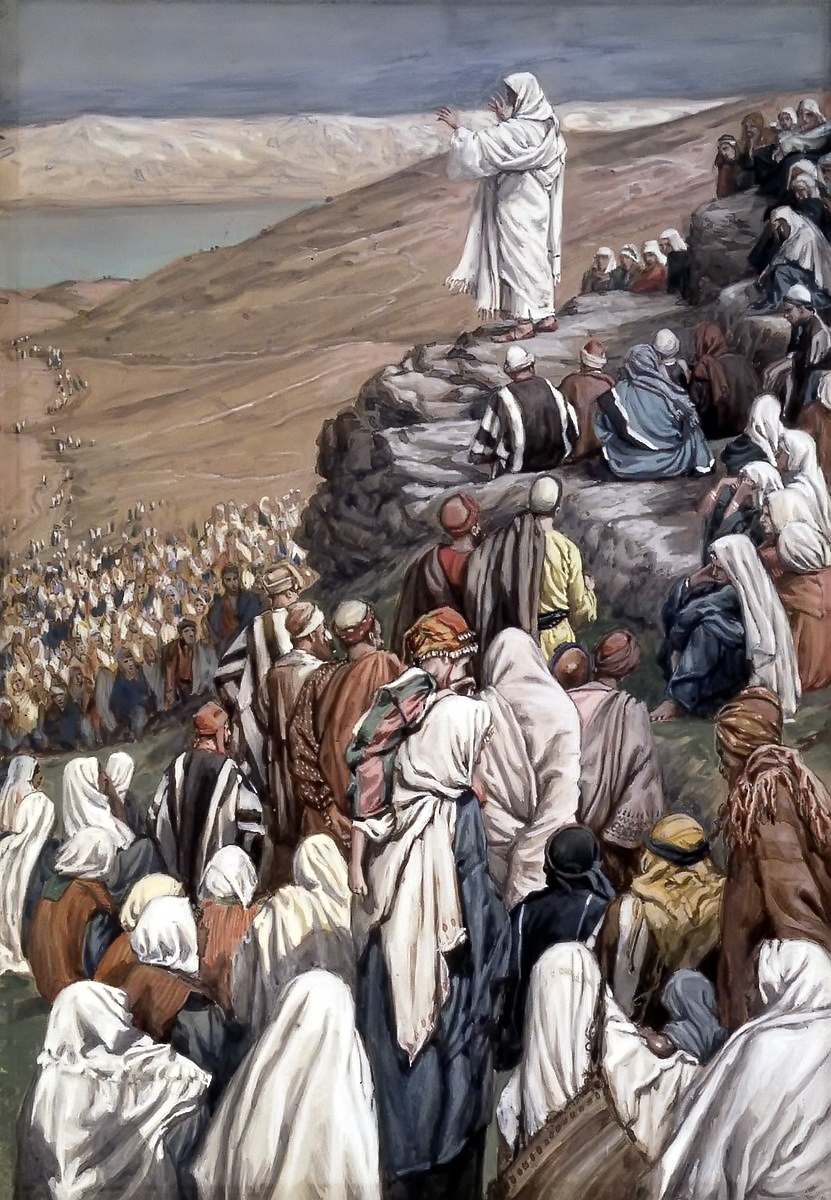
You cannot make yourself a saint; you can’t make yourself holy. And you cannot bless yourself. We hear Matthew 5 and we think that if we become poor in spirit, if we hunger and thirst for righteousness, if we grieve and mourn, if we become meek, if we are merciful, if we make peace, if we are persecuted, then we become the blessed ones. That is almost completely backwards. You cannot cause yourself to be blessed. You cannot bless yourself. So notice that this chapter begins with Jesus looking at the crowds and then going up on a mountain, calling His disciples to Himself, and beginning to speak to them. The crowds might hear Jesus, but these words are only for believers, only for disciples. If someone from the crowd hears and believes, then these words are for them. The disciples are not doing the things to become blessed; they are the blessed ones. The blessed ones are the “privileged recipients of divine favor.” It is almost synonymous with salvation. “Blessed” is a status given, not a status to be achieved. So these are statements to the disciples, the blessed ones, about who they are and what will happen to them.
It is this way elsewhere in the Gospel. When Jesus speaks about the parables being understood by believers, He says to His disciples, “Blessed are your eyes, because they are seeing; and your ears, because they are hearing” (Matthew 13:16). They did not give themselves this sight or hearing. God gave it to them by the word of Jesus. When Peter confesses that Jesus is the Christ, the Son of the living God, Jesus says, “Blessed are you, Simon, son of Jonah, because flesh and blood did not reveal this to you, but My Father who is in heaven revealed it to you” (Matthew 16:17). Same formula as here: blessed are you, because… The Father reveals and blesses and favors, and the blessed ones receive. So, Mary says, all generations will call me blessed. Not because she did a bunch of good things, but because God favored and chose her, and she said amen to His word. All privileged recipients of God’s divine favor and mercy.
And what does it look like in this world to be blessed? Not the way we usually speak of blessing. We usually think of material things: I have this, or I’ve been given these things, so I am blessed. Not Jesus. He says the blessed ones are poor in spirit. The blessed ones grieve and mourn and weep. The blessed ones are meek and humble, not thinking too highly of themselves, so that they inherit all the good things in this world. The blessed ones hunger and thirst for righteousness. The blessed ones are merciful, doing merciful things. The blessed ones are pure in heart—as John says: when Jesus appears, we will be like Him, because we will see Him as He is. And the one who hopes thus in Him, hoping in the one who will appear and make us like Himself in His resurrection body, purifies himself as He is pure. The blessed ones make peace. The world can go as far, sometimes, as keeping the peace. But they will not make peace, as Augustine’s mother, Monica, did. Augustine says that whenever she heard anything negative or evil about another person, she never repeated it to anyone else. Instead, when she found out about conflicts in this way, she did everything in her power to reconcile and to make peace between the conflicting parties. The blessed ones are persecuted for righteousness’ sake and mocked because they bear Jesus’ name.
Now which of those things would we normally associate with being blessed? Hardly any of it. The blessed ones are not the ones who have the most material things, to whom nothing bad ever happens. The blessed ones are those who have hope according to the promise of God in Jesus Christ. The blessed ones know that the way things are now is not the way it will always be, though we have never seen it with our own eyes. The blessed ones hold to the word of Jesus, that the kingdom of heaven belongs to them, that they will be comforted, that they will inherit the earth, that they will be satisfied, that they will see God—they will see Him as He is, and they will become like Him in the resurrection—and they will receive mercy.
That’s the theme that runs throughout this day: the promise sustains us in the midst of everything we see and experience now, as we go about our days and lives, as we carry out the responsibilities we have, as we bear one another’s burdens. The promise is given now, but grounded in the hope of the resurrection. We hunger and thirst, we mourn, we are poor, we have to show mercy and make peace in a world that knows neither. But the day is coming when all those things will come to an end in the consolation, satisfaction, mercy, and peace of Christ. We are the ones coming out of the great tribulation into the rejoicing multitude of all God’s holy, blessed ones. We sang it, too: “Oh, blest communion, fellowship divine! We feebly struggle, they in glory shine….” “And when the fight is fierce, the warfare long, steals on the ear the distant triumph song….” “Soon, soon to faithful warriors cometh rest….” “But, lo, there breaks a yet more glorious day: the saints triumphant rise in bright array, the King of Glory passes on His way…” (LSB 677:4, 5, 6, 7). How it is now in this creation and this age is not how it will be in the new creation and the age of resurrection.
So Jesus says to you today, however long the warfare, however you feebly struggle: rejoice and be glad! Exult, because great is your reward in the kingdom of heaven! The promise anchors your hope and faith now, even in the greatest storm, until the day when triumph, rest, and resurrection come, when what we will be has been finally, finally revealed. Blessed are you, saints of God in Jesus Christ!
In the Name of the Father and of the Son and of the Holy Spirit. Amen. “And the peace of God, which surpasses all understanding, will guard your hearts and your minds in Christ Jesus” (Philippians 4:7, ESV). Amen.
– Pr. Timothy Winterstein, 10/30/26

