Audio of the sermon is here:
In the Name of the Father and of the Son and of the Holy Spirit. Amen.
When we hear these words from God through the prophet Isaiah: “My thoughts are not your thoughts, nor are My ways your ways. As the heavens are higher than the earth, so are My ways higher than your ways and My thoughts than your thoughts” (55:8-9), we often think of them in a negative context. When things are bad, or bad things happen; when we can’t understand what God is doing or why, we say, well, God’s ways are not our ways and God’s thoughts are not our thoughts. Or maybe someone dies suddenly or tragically. I’ve prayed with families, “God, Your ways are not our ways and Your thoughts are not our thoughts, and You’ve taken this person to be with Yourself.” We don’t understand; we’re sad, maybe angry. We wish it were otherwise; we prefer it to be different.
It’s not faithless to wonder why. It’s not faithless to be sad or upset or angry with God for what is happening, or what has happened. It’s not faithless to cry out in pain, grief, or anguish. It is faithful to say, “God, I don’t know why You’ve done this, or what You’re doing. But You’re God and I’m not, so I entrust myself and all things to You.” Daily prayer at night and in the morning is a good way to practice entrusting ourselves to God in Christ, whatever might happen, or whatever might have happened. We tend to think in those times that God’s ways are not our ways and His thoughts not our thoughts.
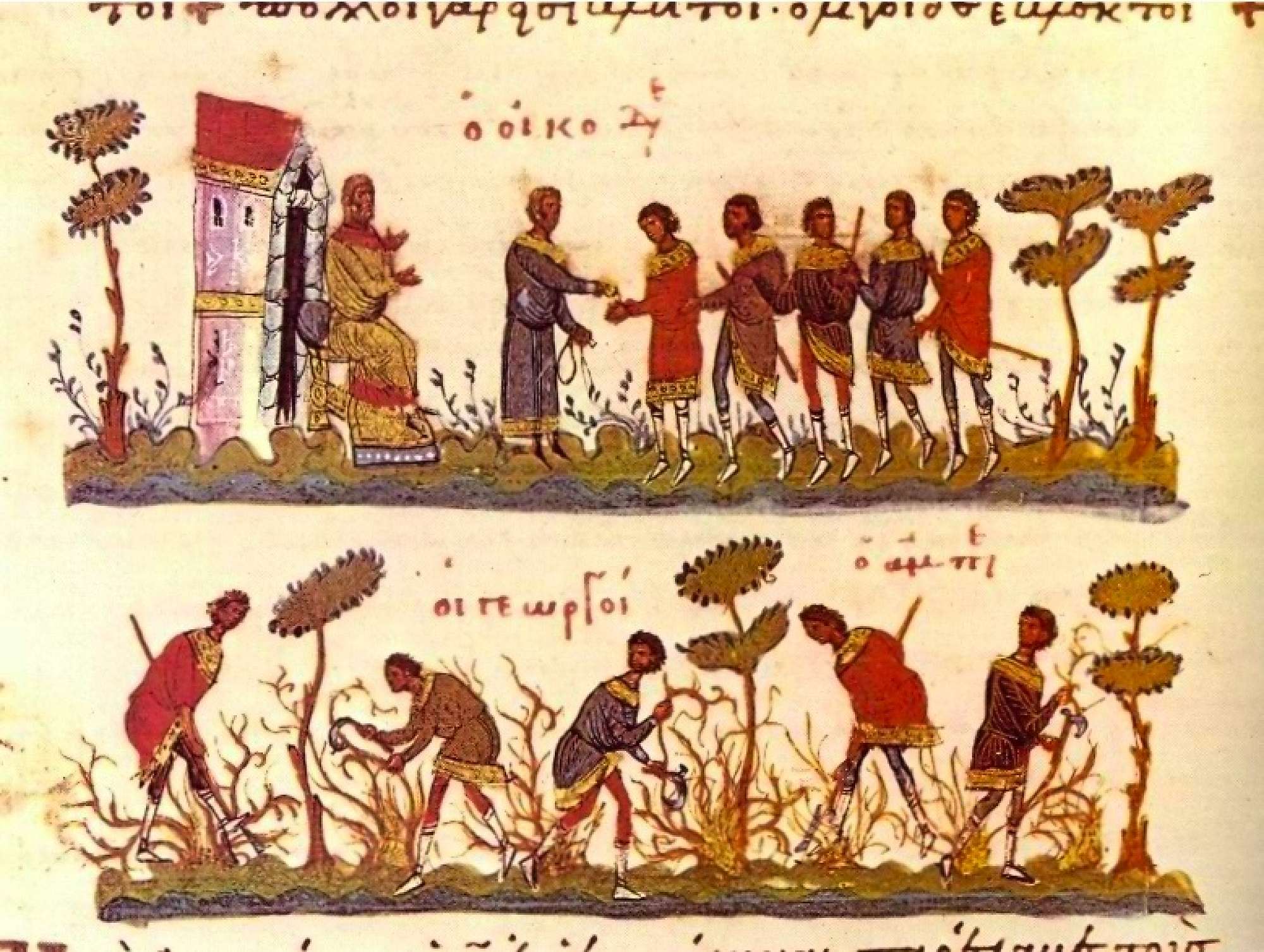
But what if we hear those words in the context of this parable in Matthew 20? The Kingdom of Heaven is like this, Jesus says. It is another way of saying, This is what God’s ways and thoughts are like. So it’s like a man who owns a vineyard, and He needs workers to go work in His vineyard. So in the first hour He goes out and finds some workers and they agree to work that day for a denarius, which is one day’s wages. Then the owner goes out at the third hour and finds more workers, and hires them, and tells them He will pay whatever is right. Then the same thing happens at the sixth hour and the ninth hour. And then, at the eleventh hour, the man goes out again, and He finds more workers, and He says, “Why have you been standing here idle all day?” And they say, “Because no one hired us.” Okay, you’re hired. Go and work in My vineyard.
An hour later, the owner tells His managers to call in the workers and pay them, starting with the last, those who only worked one hour. They get a denarius. And the first workers think that, in fairness, they will receive more than one denarius, since they worked 12 times as long as the last workers. But they, too, get a denarius. And they don’t like that. But God’s ways are not our ways and God’s thoughts are not our thoughts. Maybe it’s not the negative things that make us the most upset, the things for which we have no answers. Maybe the worst thing is that God is not fair. In one sense, it’s equitable, because they all receive the same pay. But in another, it’s not equal, because some of them worked far longer than others. As they say, we carried the burden of the day under the burning sun.
Jesus tells this parable in response to words from Peter, just as we heard last week in the parable from Matthew 18. Peter and the disciples had heard Jesus’ conversation with the rich man about being saved, where Jesus told him to go and sell everything he had and give it to the poor and follow Jesus, and he would have treasure in heaven. And the disciples are having trouble believing that anyone can be saved if the rich are not saved. But Peter asks, “Lord, we have left everything and followed You. What, then, will we have?” Jesus doesn’t tell him that it’s a stupid question. He says that the Son of Man will appear on His glorious throne and the twelve will sit on twelve thrones judging the twelve tribes of Israel. And whoever has left houses and siblings and parents and children and fields for His sake will receive 100 times what he’s lost and inherit eternal life. But the first will be last and the last first, the same thing Jesus says at the end of this parable, just to make sure Peter hears. In other words, that hundredfold and eternal life is not only given to the twelve, but even to those who begin work in the last hour of this world’s last night. God is not fair, but He’s good and He does what He wishes with what is His to give. In other words, even though it’s described as wages and pay, which usually go with what is worked, in this case, the “pay,” the “reward,” the “wages,” are nothing but the Lord’s generosity. He gives what He wishes and He is good. He pays what is right, but not according to human standards of rightness.
Maybe then, our problem with the bad things that happen is the same as our problem with God’s goodness. We do not like that He is not fair. We think that what is good is for everyone to get what they deserve. The really good people should have good things and the really bad people should have bad things. Why do bad things happen to good people? we ask. But we cannot ask that without also asking, Why do good things happen to bad people? It’s the same God behind it all. We like to talk about grace and generosity and the gifts of God, but what if they go to someone we don’t think should get it? Maybe you’ve had this thought: people who have done a lot of bad things, maybe even people who go to prison for a long time, or who are executed for their crimes—why should they get to repent in the end? Why should a life-long criminal, or a life-long abuser, or a life-long adulterer be able, on his or her deathbed, to begin regretting everything and be baptized. Or confess their sins, and hear—just as we do every week—“I forgive you all your sins in the Name of the Father and of the Son and of the Holy Spirit.” When we’ve done what is right! We’ve followed Jesus! We went to church! We volunteered! We worked! We did the good, Christian things that we thought we should do! And they get off the hook after a life of fun and games and enjoying their sins.
But maybe you can see the problem: that the one who “does everything he thinks he should do” has mistaken the gracious mercy of God for something he deserves. And the idea underneath all of it that sharing in the grace of Jesus is “doing the things we should do” and not getting to do all the “fun things.” It’s a mistake of our vision, it is unbelief, to think that unbelievers are really having all the fun and we don’t get to do them because we’re trying to do the right things. They will even tell you that they’re having all the fun and you might believe them. But if that were the case, the hypothetical death-bed confession would not be regretting anything. Or—just maybe—could it be that all the unbelieving fun and chasing fleeting pleasures, sin for a short season, isn’t all that the one doing it makes it out to be? Isn’t it, in the end, just a little bit pathetic? Isn’t it really just a wasted life on one’s own desires and pleasure, and what does it get you in the end? Do we begrudge God His faithfulness and generosity because His mercy might cover them as well? The last might be first and the first last.
It’s never been about how much work for how much pay. The good news of reward and hundredfold doesn’t work that way. It is, as becomes clear, all the gift of the Lord of the vineyard who has called you from your idle emptiness into the fruitful work of His Kingdom. Maybe you’ve been working for a while. This world and our own weakness and sin can certainly make it exhausting. Maybe you’ve been working for a little while, and it’s still fresh and new. Or maybe you’ve been standing idle in the marketplace of the world because no one has hired you. Jesus says, now, Come and work in My vineyard. You’re hired, in the Name of the Father and of the Son and of the Holy Spirit. Be baptized, confess your sins, be forgiven, eat and drink at the Master’s table.
He may call you to work in the Church, but that’s not the only kind of work He has. It’s not that the real work of the vineyard has to be “professional church work” or other silly names. He might. Maybe you should be a pastor or a deaconess or a missionary or a teacher. Or maybe you should be a Christian in some other part of the vineyard, serving your neighbor as God assigns. Your family, your friends, your co-workers, your roommates. This, for now at least, is where God has called you to work, to cultivate, to till the ground, to water the seeds. It’s not less holy because it’s not “church work.” And it’s not so much the work in itself, although God uses it. It is holy work because you are holy in Christ Jesus, and whatever you do, you do it with all your might to the glory of God and in the confidence of His calling you to be one of His Christians. So work joyfully, no matter how much time He gives you, because His merciful and gracious gift, by which He restores and repays everything that you have or might lose, covers all His people, from the twelve until the day the work is done. Jesus has restored all things in His own work, and He will give you much more than you could ever lose, and you will inherit from Him eternal life.
In the Name of the Father and of the Son and of the Holy Spirit. Amen. “And the peace of God, which surpasses all understanding, will guard your hearts and your minds in Christ Jesus” (Philippians 4:7, ESV). Amen.
— Pr. Timothy Winterstein, 9/18/26

